I templidi Attilio Mastrocinque
Secondo una tipologia architettonica molto diffusa nel mondo greco e romano, la statua di culto era conservata all’interno di una cella, la parte più segreta del tempio, accessibile ai soli sacerdoti e preceduta da uno spazio aperto porticato (il pronao). Intorno ai templi sono presenti ambienti accessori e spazi aperti, adatti a ospitare i fedeli raccolti durante le celebrazioni delle divinità. I santuari grumentini sono convenzionalmente identificati, fin dall’epoca del rinvenimento, da una lettera dell’alfabeto.
Il tempio A
Davanti alla gradinata di accesso è ancora conservato un altare (ara), anch’esso rivestito in pietra calcarea grigia. Durante gli scavi nel tempio A è stato rinvenuto il torso in marmo rappresentante un fanciullo, identificato forse con la divinità egiziana Arpocrate. Sarebbe affascinante, ancorché non dimostrabile con sufficiente attendibilità, presupporre la presenza di un culto orientale (egizio in particolare) nel centro di Grumentum. Non è chiara la cronologia della fondazione del tempio, che ebbe un ciclo di vita piuttosto lungo, e venne abbandonato all’incirca nel V secolo d.C.
Il tempio B
Il tempio C
Questo importante reperto ha consentito di riconoscere il tempio come un complesso dedicato al culto imperiale (ossia un “augusteo”). Il podio, a cui si accedeva tramite due scalinate laterali e una sulla fronte dell’edificio, è decorato da una cornice in pietra arenaria. L’eleganza e l’importanza della struttura è testimoniata anche dal pregiato pavimento, conservato attualmente in museo, in marmi colorati (opus sectile), disposti a formare un motivo geometrico a rombi.
Il tempio D
Della struttura, assai mal conservata, rimane l’imponente podio, alto circa 3 metri, costituito al suo interno da una struttura “a vespaio” (ossia un reticolato di muri, funzionali a sostenere tutta la struttura superiore) riempita di sabbia e terra. Il nucleo del podio, così realizzato, è rivestito da paramenti realizzati in opera reticolata (blocchetti a forma di prisma con la faccia a vista piatta, che venivano inseriti nel nucleo in cemento) in pietra calcarea grigia.
Copyright testo e immagini (ove non inseriti altri riferimenti) di Attilio Mastrocinque. |



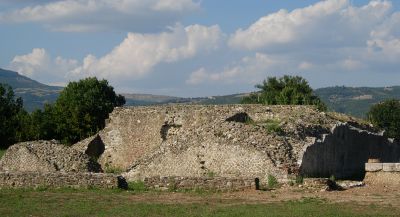
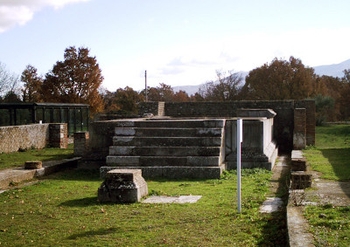 A Grumentum, nell’area urbana, sono stati scavati quattro templi, tutti caratterizzati da una struttura su alto podio, di tradizione italica.
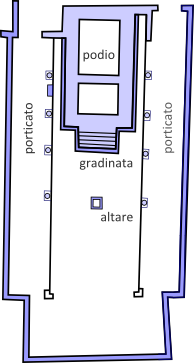 Il tempio A, posto dietro la scena del teatro e orientato in senso Est-Ovest, è circondato da un porticato, ed è accessibile attraverso due ingressi minori dalla piazza antistante il
 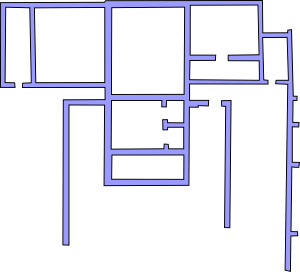 Il tempio B, a fianco della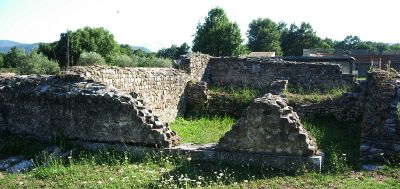
 Il tempio C e il tempio D, entrambi nel Foro, risalgono all’epoca degli imperatori
 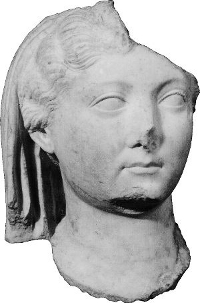 .
.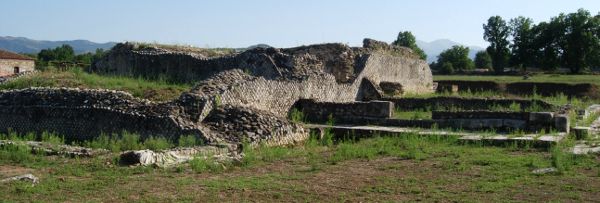
 Il tempio D è forse il Capitolium grumentino, ossia il santuario più importante della città, che ospita il culto della triade capitolina, le tre principali divinità del pantheon romano: Giove, Giunone e Minerva.